Serving Middle TN for over 20 yrs.

Fill out the form below to get your free initial consult

    📩 Contact Tech Bravo

    Complete the form below and we'll get back to you shortly.


    Serving Middle TN for over 20 yrs.

    Intermittent Charging System Anomaly on a 2011 Kia Sedona EX – SOLVED

    This technical case study details the advanced diagnosis of a persistent, intermittent charging system failure and stalling anomaly on a 2011 Kia Sedona EX (3.5L V6). After multiple failed alternator and battery replacements, the focus shifts to finding elusive high-resistance faults in terminations, grounds, and control relays. The guide outlines a precise diagnostic strategy utilizing Thermal Imaging (TI) and specialized electrical testing to pinpoint the true cause of the chronic electrical failure.
    My Passion For Noise

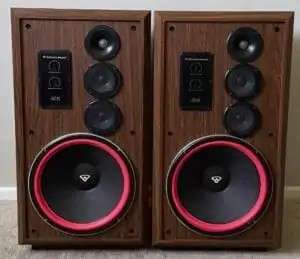
    When I was about 14 or 15, I got in to home audio because a neighborhood friend was a designer and audiophile of sorts. So most of the money I could scrape up went to HiFi Buys near the oil change place where I worked… and Crutchfield. I had so much stuff I don’t remember it all but at its best my system had a pair of Cerwin vega 15″ 3-ways and a pair of Advent 2-ways, driven by a Carver Integrated amp/tuner with a Soundcraftsmen 3rd octave EQ looped in. No CD’s back then, then so cassettes were played in a Nakamichi deck… or we jammed FM stereo. The Eagles “Take It Easy” and Dire Straits “Money For Nothing” would bring tears to your eyes. The high’s were crisp yet buttery smooth. Mids were present, natural,  and well-balanced. And the bass would knock pictures off the walls, you could feel it in your soul with no muddiness or dead zones to speak of. It was a great combination that took lots of buying, selling, bartering, and experimentation.     When I started driving, I wired a system in the first, and every subsequent ride I had, except the motorcycles. The most radical autosound system I had was a wall in a 2 door sentra with two  15’s and four 10’s. I bought the box from a friend I met at Nashville Tech who had won a few shows with it. I cut enough of the Sentra out to make that box fit and loaded with with Rockford Fosgate’s that specd similar space requirements as the drivers the box was made for. I drove each 15 with a Punch 150 amp and I drove the four 10’s with 2 Sherwood 240’s bridged to 2 Channels. Talk about some heaters! LOL but hey, they were BANGIN!       Now I’m 50 something and I have as close to a bulletproof combination of speakers and amp that you can get at the price point.  I settled on this configuration after blowing probably 12 or 14 subs and 6 or 7 amplifiers. So i like to drive my bass to the extreme. I like to feel it. And I may tend to sacrifice some of that smooth and buttery sound for a hard slap on the back at ~100Hz and below. I have destroyed Fosgate R2D4-12’s , Polk Audio DXi124’s, MA Audio, Alpine, and I think a Kicker or 2 as far as drivers go. And I’ve smoked Infinity, Sony, Skar, and multiple Hifonics Class D monoblock amps. And then I decided to see how 2 Skar 12’s in an OEM box would do on a Taramps Smart 3000 at 1 Ohm. And let me tell you what… I’m probably jinxing it but… I have had the same 2 subs and box since Feb. 2021 and they still hit hard and sound great. And I’ve tried to kill that Taramps amp and I can’t. I know this is lower-end equipment but I am very impressed with it, because no matter how much punishment I put the system through, they just keep on playing. So if you are in the market for two 12’s and an amp at the lower price points that are well paired and proven to be reliable in my book, here is what I am running: Skar 12″ SDR Series Vented Subwoofer Enclosure SDR-2X12D4 https://www.amazon.com/gp/product/B07L5W8TK6 Taramps SMART3 3000W Class D Monoblock Smart Amplifier https://www.amazon.com/gp/product/B084D4SDW2 If you want quality over quantity and the best sound possible and/or are an audiophile (and have deep pockets)… this combo may not be for you. You probably want brands like Focal, B&W, B&O, McIntosh, Audison, Brax/Helix, etc… and design a fully augmented system specific to your vehicle, needs, music taste, etc… NOTE: It’s critically important that you have adequate and proper power for these amps. This means you will probably want 1/0-gauge power and ground wires. A high output alternator, Additional batteries, and/or caps may be required. Be sure to consult the equipment manufacturers and/or certified autosound professionals for power requirements, etc… and STAY FAR AWAY FROM CCA POWER WIRE. If you want the best bang for your buck on good copper power cabling, welding lead is not easy to pull, but its flexible, tough, and capable. OFC copper is nice, but for power, just ‘plain’ 100% copper stranded wire of proper gauge will be fine. I do use OFC for speaker wires, i think it makes a little more difference there.

    2019 Lexus RX 350 Front Brakes

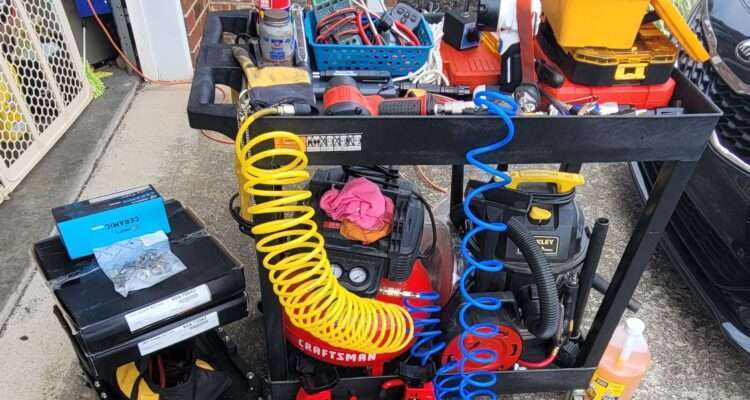
    I did my daughter’s front brakes. Figured I would document my process in case it could help others. Sorry for the audio and background noise, etc… in the video. This was a last minute decision to document the process so I didn’t bother setting up my fancy recording apparatus or practicing, just wanted to get er done. I figured someone may find it helpful. It’s pretty basic stuff but i do list torque specs and things like that and probably call things the wrong name LOL so… take it easy on me haha. you will need: brake and rotor ‘kit’ for the specific vehicle safety glasses, ear plugs, gloves, etc… cardboard, etc… to contain the mess under the work area, and for kneeling on, etc… jack, jackstands, wheel chocks torque wrench with 20~90 ft⋅lbf range 14mm (~25 ft⋅lbf), 19mm (~77 ft⋅lbf), and 21mm (~76 ft⋅lbf) sockets, wrenches, etc… rags, brake cleaner, foam swabs, anti-seize compound, wire brush, etc… method to compress dual piston systems if you can’t manually compress them better with: brake fluid moisture tester, pneumatic impact and ratchet, air blowing nozzle, low-profile mechanics stool with tool tray, extra brake fluid, fluid syphon pump (just in case), etc… Here is an AI generated summary of the video: The Ultimate Guide to Replacing and Reconditioning Brakes on a 2019 Lexus RX 350 Brakes are one of the most important parts of your vehicle. They keep you safe on the road by stopping your car when you need them. Over time, brakes wear out, and replacing or fixing them becomes necessary. Doing your own brake work might seem hard at first, but with the right steps and tools, you can do it confidently. This guide takes you through each step to inspect, disassemble, clean, and reassemble the brake system on a 2019 Lexus RX 350. Understanding the Brake System of a 2019 Lexus RX 350 Overview of Brake Components Every brake system has key parts that work together for safe stopping. The calipers squeeze the brake pads against the rotors to slow down the wheel. The brake pads press against the rotors to create friction. The rotors are metal discs attached to the wheels. Brake pins help the calipers slide smoothly. Sensors alert you when pads are worn out, and hydraulic fluid transfers force from the brake pedal to the calipers. Each piece plays a vital role in braking performance. Unique Aspects of Lexus RX 350 Brakes Lexus RX 350 uses specialized features like ABS sensors and wear indicators. The caliper pins are designed for smooth movement with correct lubrication. OEM specs recommend brake service intervals to keep braking sharp. Knowing these details helps you understand what to expect and how to maintain your brakes properly. Preparing for Brake Service Tools and Equipment Needed Gather these tools before starting: Hydraulic jack and jack stands Impact wrench and socket set (preferably 21mm for lug nuts) Torque wrench to tighten bolts properly Screwdrivers, brushes, and clean rags Non-chlorinated brake cleaner Plastic tools and pick sets High-temp brake grease and antiseize compound Gloves, safety glasses, and a respirator if needed Safety Precautions and Best Practices Always work on a flat, stable surface. Use wheel chocks on the opposite tires and engage the parking brake. Support the vehicle with sturdy jack stands—never rely solely on the jack. Wear safety gear to protect your eyes and hands, especially when handling brake chemicals. Working safely keeps accidents at bay and ensures your tools work effectively. Step-by-Step Brake Inspection and Fluid Testing Checking Brake Fluid for Moisture Content Start by inspecting the brake fluid reservoir. Use a moisture tester to see if the fluid has absorbed water. If the moisture level is high, it’s time to drain and replace the fluid. Also, check the filter basket inside the reservoir. Carefully remove it with a hooked tool, clean, and inspect it. Visually assess the fluid and decide if a flush is needed. Fresh brake fluid helps maintain optimal braking and prevents damage. Assessing Brake Pad and Rotor Condition Look for uneven pad wear or deep grooves on the rotors. Small cracks or scoring may indicate the need for rotor replacement. Measure the thickness of the pads—if they’re close to the minimum thickness, swap them out. Also, inspect caliper seals and pistons for leaks or rust. Catching these issues early keeps your brakes working smoothly. Disassembling the Brake System Lifting and Securing the Vehicle Begin by parking your car on a flat surface. Chalk the back wheels to prevent movement. Use a hydraulic jack at the proper lift points on the Lexus RX 350—these are marked under the vehicle. Place jack stands under sturdy frame points and lower the car onto them. Always double-check stability before crawling underneath. Removing the Wheels Loosen lug nuts with an impact wrench. Keep them in a safe place and remove the wheels. Set them aside where they won’t get damaged. Now your brake system is exposed and ready for the next steps. Detaching the Calipers and Rotors Remove the two caliper pins (usually 14mm). Once those are out, carefully lift or support the caliper with a bungee cord or wire—never let it hang on the brake hose. Remove the brake pads from the caliper. Next, unbolt the rotor from the hub, taking care not to damage the wheel hub surface. Wiggling and gentle tapping may be needed for stuck rotors. Disassembling Calipers and Pads Take pictures or videos during disassembly to remember the order of parts. Carefully remove slide pins and clips, cleaning them as you go. Examine the pistons and seals for damage. Clean the caliper parts thoroughly to prepare them for reconditioning or replacement. Cleaning and Reconditioning Brake Components Brake Part Cleaning and Airborne Particles Safety Spray non-chlorinated brake cleaner inside the calipers, and on rotors and pins. Use a spray and a rag to wipe away dirt and brake dust. Protect your eyes and lungs by wearing safety glasses and gloves. Spraying at an angle minimizes dust becoming airborne. Always work in a ventilated space. Inspections and Damage Checks Inspect each part carefully. Look for scratches, corrosion, or uneven wear. Replace any worn or damaged parts, such as seals or

    The Warbarge

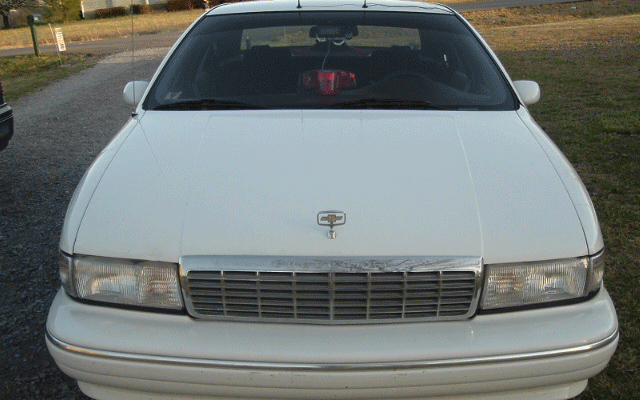
    This is project “WARBARGE”. It is my 1994 Caprice Classic which was given to me by my late grandfather. This is NOT a police package but does have 240 amp alternator and a 990 amp battery run by an L99 power plant which is an LT1 with smaller stroke and bore. It does incorporate GPS and video monitoring as well as an alarm system and other security features which are classified and cannot be published. Yes there was a 4.3L V-8! The L99 4.3L was a 305 with  a reduced stroke. It was was introduced in 1994 for the Chevrolet Caprice. It was externally identical to the LT1, but the bore was 3.736″ & the stroke was reduced by 3″ giving it a displacement of 263 in3. Like the LT1, it features sequential fuel injection, reverse cooling, and an optical ignition pickup. Output is 200 hp @ 245 lb·ft. Due to its smaller displacement, it provides better fuel economy than the LT1, but reduced horsepower & torque. ON-BOARD PC A Dell Latitude C600 attached to a Dell C-Port hardwired docking station 850Mhz Intel Pentium Processor with 66Mhz Front Side Bus 10 Gig IBM Daria Hard Drive 256K RAM 1 DB-9 Serial Port 1 DB-25 Parallel Port 2 Hi-Speed USB 2.0 Ports 10/100 LAN and RJ-11 Modem Jacks 2 PCMCIA Card Slots 1 PS-2 Jack 1 S-Video Output 1 IR Port I am currently running Microsoft XP Professional and Auditor Security Collection systems through a dual boot GRUB loader imbedded into the Master Boot Record. I have the option to run as many OS’s as I can fit on the drives. RF DEVICES Senao 200mW 802.11b hi-power PCMCIA Card with dual antenna jacks Enterasys Cabletron Roamabout 802.11b PCMCIA Card with 1 antenna Jack Cambridge Silicon Radio USB Bluetooth Dongle with external antenna modification Rand McNally Serial GPS Receiver (ATMEL Chipset) I run both wi-fi cards and GPS simultaneously with no problems in both WinXP & Linux. In Linux I can also receive packets in monitor mode with 1 card while injecting weakIV packets with the hi-power card effectively increasing the throughput and capture rate by 50 to 100 times. AUDIBLE WARNING Federal Signal BP-100 Siren Speaker Federal Signal MS-4000 Siren Generic Back Up Alarm VISUAL WARNING 1 Whelen Dual Talon LED Dashlight (Red & White) 2 Sho-Me Red LED Micro Lites with External Flasher (1 on each side) 2 Sho-Me Red LED Duo Dash Lights with Internal Flasher (1 front, 1 rear) 1 Sho-Me Red LED with External Flasher (rear deck) 2 Sho-Me Red Strobe Heads (rear deck) 4 Nova 30W Corner Strobes (1 in each corner) 1 Whelen 6 Channel, 60 Watt Comet Flash Strobe Power Supply 1 Red Linear Strobe Head with Integral Power Supply (underside trunk lid) COMMUNICATIONS 1 Uniden 200 Channel Handheld Scanner with Air band, 800Mhz, and WX 1 Uniden PRO 40 Channel CB Transceiver with President Dynamic Microphone 1 Wilson Lil’ Wil Lo Band CB Antenna 1 Larsen Dual Band VHF/UHF Center Load Antenna 1 Motorola Unity Gain 1/4 wave UHF Antenna with NMO Lo Profile Mount 1 Antenna Specialists 800Mhz Passive Repeater with Capacitive Inductor 2 2.4Ghz 7dB gain Wi-Fi antennae 1 Kenwood TK-272G 32 Channel VHF Handheld Tranceiver 1 Motorola Minitor IV VHF Radio Pager 4 Uniden GMRS UHF 14 Channel Tranceivers 1 Sprint EVDO Wireless Broadband AirCard 1 Radio Shack PRO-83 Scanner with Signal Stalker SAFETY EQUIPMENT Morning Pride Bunker Pants Morning Pride Turnout Coat Ranger Combat LB Structural Firefighting Boots Nomex Hood Structural Firefighting Gloves Bullard Structural Firefighting Helmet with Face Shield Pelican Recoil LED Helmet Mounted Flashlight Pak Mule NFPA approved Personal Escape RIT Belt with forged D Rings Bail Out Bag with 100′ 7mm Nomex Life Safety Rope, 4 NFPA Carabineers, and 1 figure 8 Decender 1 Truckman Battle Axe with Flame Retardant Sheath 2 Pr. Wire Cutters 4 Sprinkler Wedges/Door Chocks 10′ Tubular Webbing This project has been dismantled but this page will remain intact for reference.